
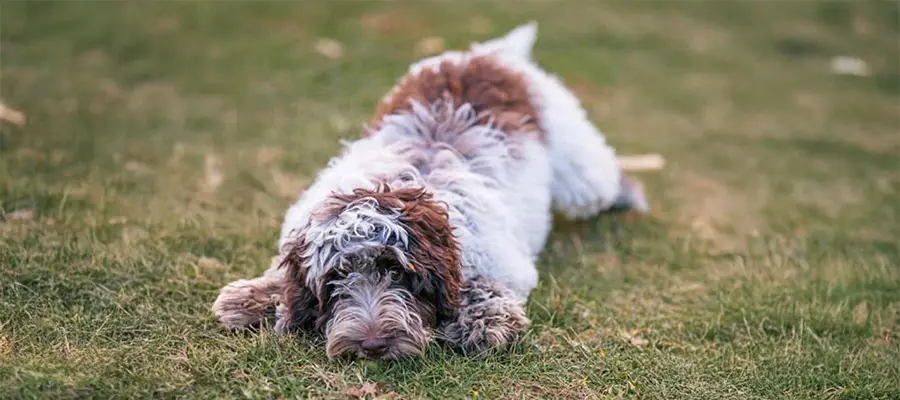
Roan is one of the most captivating coat patterns seen in Australian Labradoodles. Rather than being a single colour, it is a pattern in which pigmented hairs are blended through areas that would otherwise be white. The result can look softly peppered, marbled or mottled, with every dog expressing the effect a little differently. In our opinion, Roan is one of the prettier colours on offer.
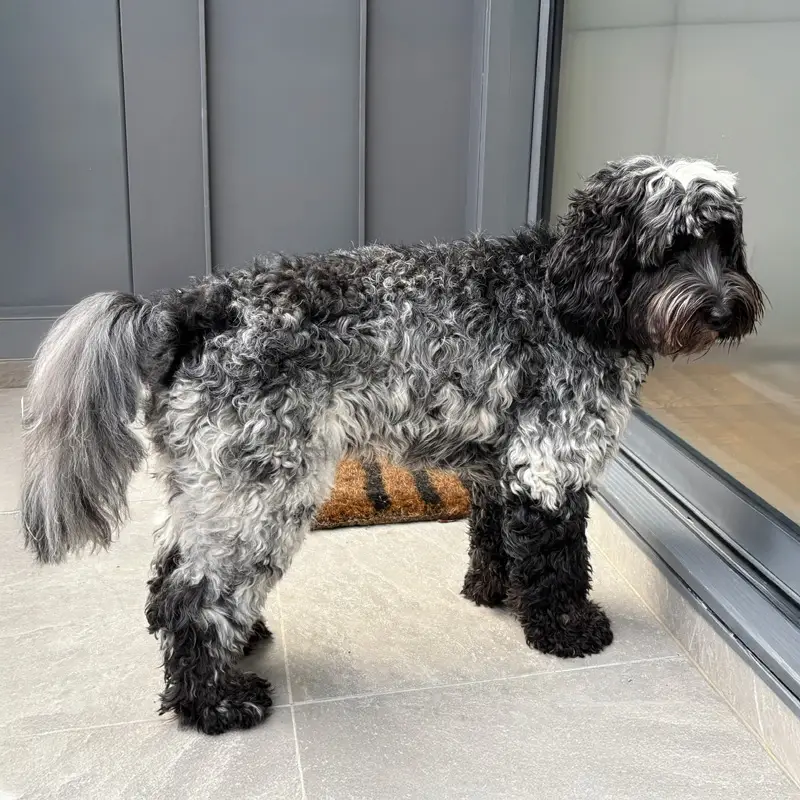
This blog post explains the everyday language used around roan colouring, the visual differences between similar-looking patterns, and why young puppies may look very different from the adult version.
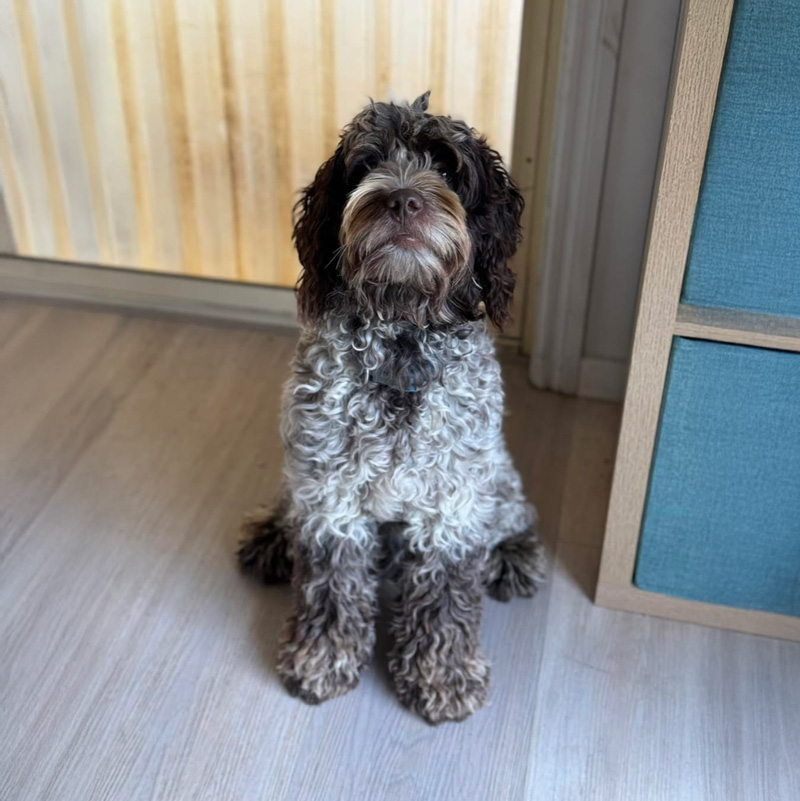
At a glance: what is roan?
In canine coat-colour language, roan describes an intermixture of white and pigmented hairs within the parts of the coat that would otherwise appear white. The pigment itself may be black, chocolate, caramel, or gold; the defining feature is the distribution of darker hairs through the white patterning, not the base pigment alone. The Worldwide Australian Labradoodle Association (WALA) describes roan as “heavily mottled darker color on the white parts of the coat.” [1]
| Question | Short answer |
|---|---|
| Is roan a base colour? | No. It is a pattern that affects the appearance of white areas; the underlying pigment colour is a separate feature. |
| Does every roan coat look alike? | No. Density, distribution, coat length, grooming, lighting, age, the amount of white patterning and other colour influences can all change the visible result. |
| Can Australian Labradoodles be roan? | Yes. WALA lists roan among Australian Labradoodle coat patterns. [1] |
| Is roan the same as merle? | No. They are different patterns; merle should not be used as another name for roan. |
How to recognise the pattern
A roan-patterned Australian Labradoodle generally has a blended effect through white sections of the coat. From a distance, the pattern may look soft and diffuse. On closer inspection, individual white and pigmented hairs are interspersed. Roan is most readily seen on dogs with enough white patterning to provide a visible canvas; a dog with only a small white chest marking provides much less area in which to see it.
In the original scientific description of the phenotype, roan and ticking both refer to pigment appearing within otherwise white areas. Roan is comparatively even and blended, while ticking is more often described as separate, speck-like spots.
Roan, ticking, parti, merle and colour change: the practical differences
| Term | What it usually looks like | The useful distinction |
|---|---|---|
| Roan | A heavily blended or mottled field of darker hairs through white areas. | Roan describes pigment distributed through a white-patterned area, not a base colour. |
| Ticking | More distinct, regular specks or small spots in white areas. | Ticking can be difficult to distinguish from a heavily marked roan coat and may occur alongside it. |
| Parti | Broad white areas with clearly defined patches of another colour. | Parti describes the large-scale arrangement of white and coloured areas. A parti dog may also show roan or ticking within its white sections. |
| Merle | An irregular marbled or patchy dilution pattern. | Merle is a separate pattern and should not be confused with roan. |
Why roan puppies can look different as they grow
Many puppies that later show a roan or ticked appearance begin life with comparatively clear white sections. Pigmentation can become more obvious over the first weeks and months, so an early photograph is best treated as a snapshot rather than a final prediction.
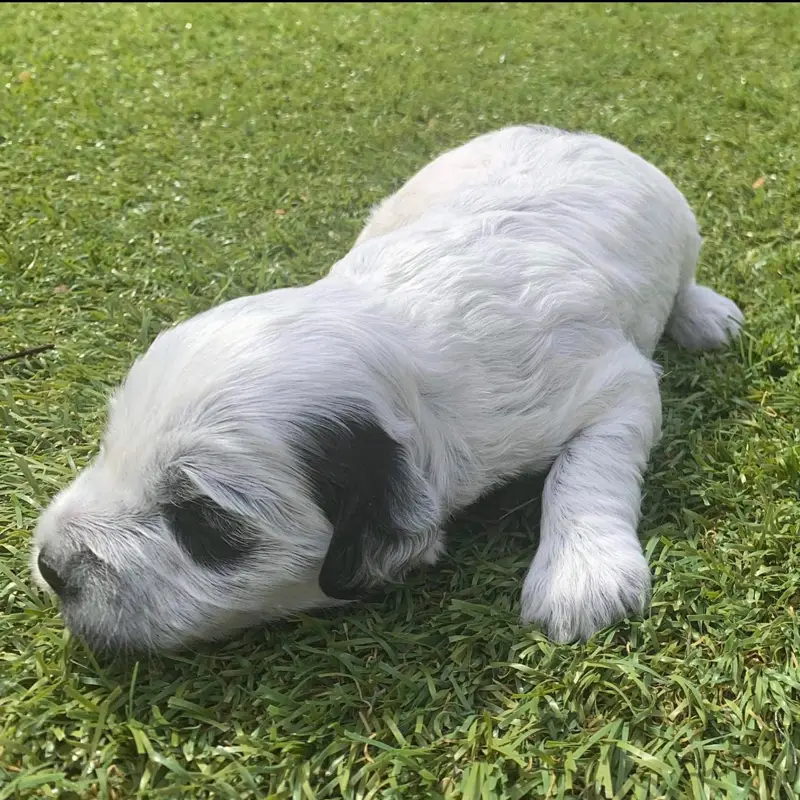
A peek inside the Burrinjuck nursery
At Burrinjuck, we are delighted to watch coat patterns unfold over time. On 10 August 2026, Burrinjuck Cabaret~Jewel and Burrinjuck Jumanji~Murphy welcomed a precious litter of five chocolate parti puppies. Their broad white patterning gives us a wonderful opportunity to observe how individual coats develop in the weeks and months ahead.
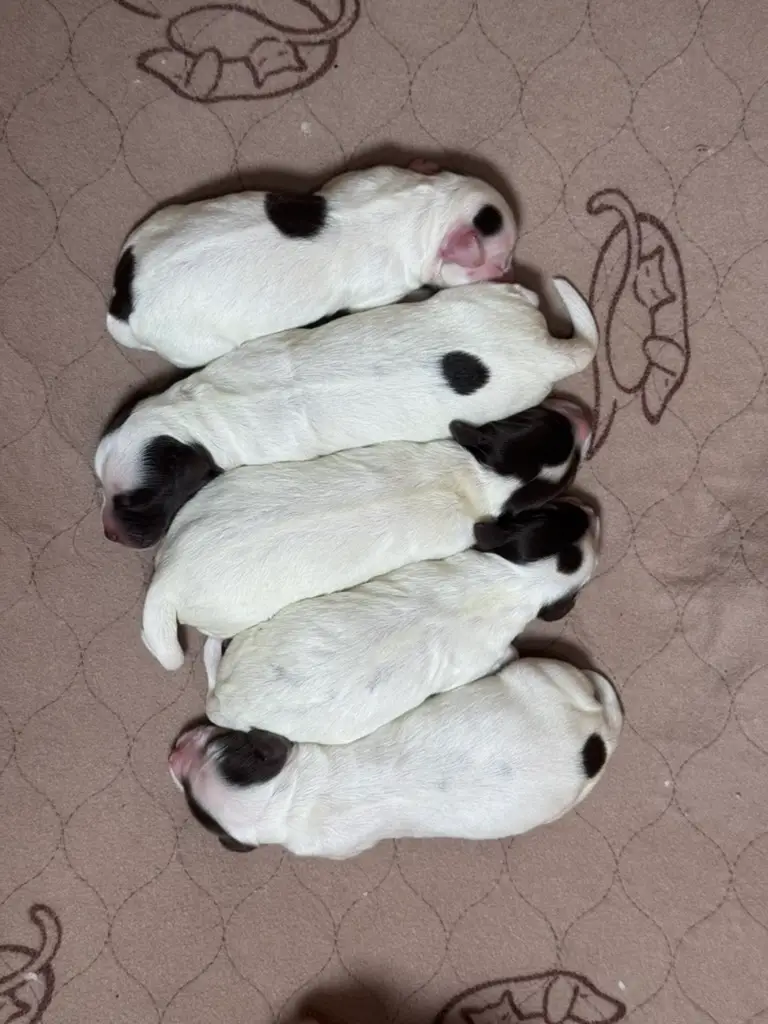
We have already noticed early features such as pigment changes over the nose, and soft paw pads, as well as a darker layer beginning to show beneath the white top coat. Those observations can be fascinating, but they are not a substitute for time, and reliable records. As we continue to learn and gain knowledge and experience around this unique and special genetic patterning, we hope to offer more examples of adult coat types.
Thoughtful breeding comes first
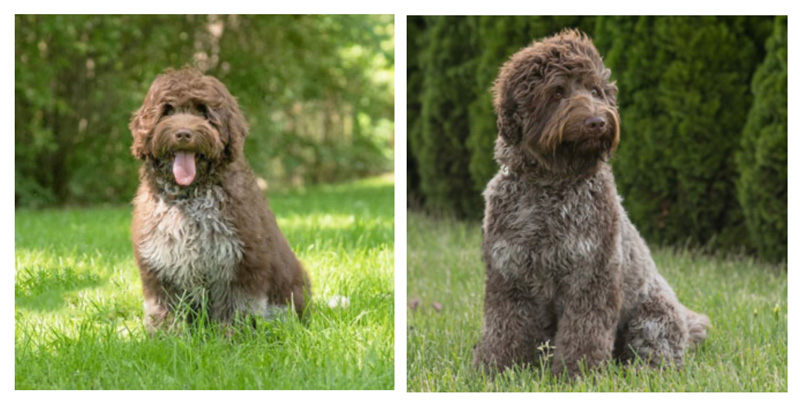
Roan can be a beautiful and exciting feature, but it is never the only consideration in a responsible breeding decision. At Burrinjuck, we consider coat traits as one part of a broader picture that includes health testing, temperament, structural soundness, verified pedigree and genetic diversity. Our focus remains on raising healthy, well-socialised Australian Labradoodles whose families can enjoy their distinctive coats as an added delight.
Frequently asked questions
Can a dog be parti and roan?
Yes. Parti refers to large areas of white and another colour, while roan describes darker hairs distributed within white areas. A parti dog can therefore show roan-like mottling in its white sections.
Will a white puppy always become roan?
No. White patterning on its own does not establish that a puppy will develop a roan coat. Time, family history and an appropriate genetic test provide much more reliable information than a newborn photograph.
Is roan rare?
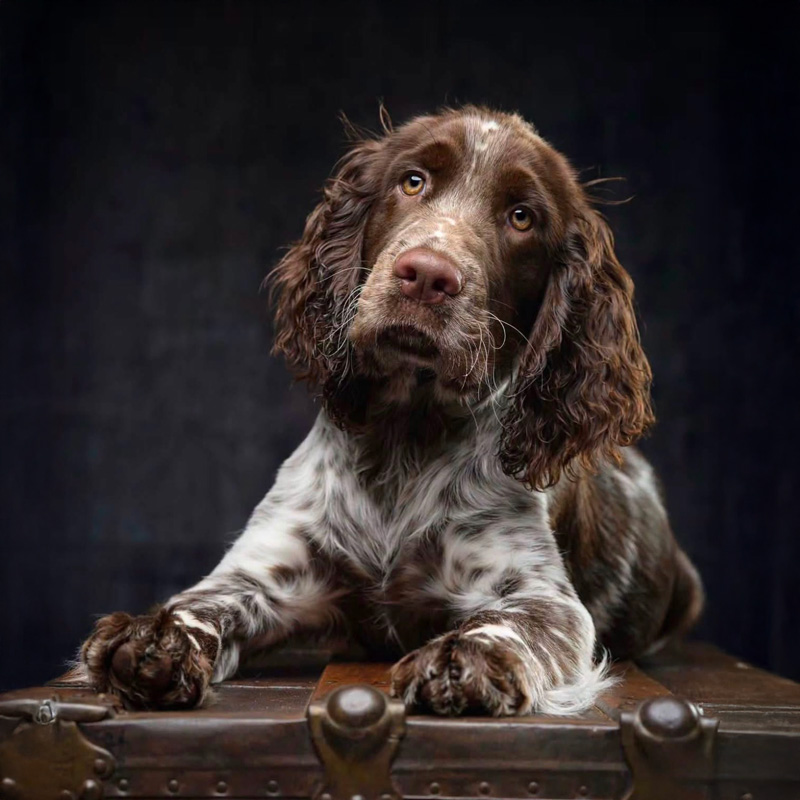
Roan is currently a relatively rare colour trait within the Australian Labradoodle Breed. The Australian Labradoodle has Labrador, Poodle and also Cocker Spaniel as foundational to the Breed. The roan gene is commonly found within Spaniel lines.
Share your roan story
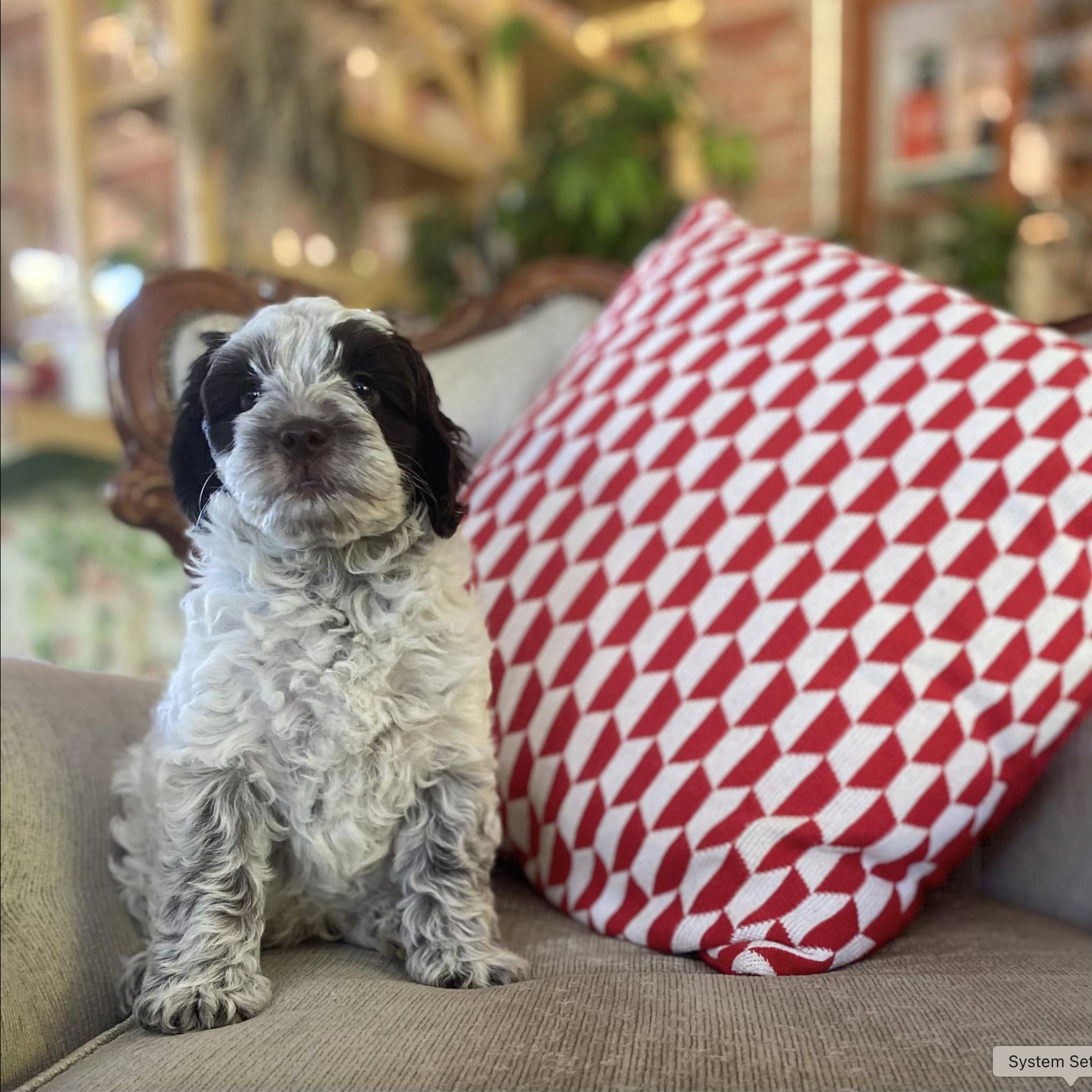
Do you adore the magic of roan? We would love to see photographs of your roan Australian Labradoodle and hear how their coat changed as they grew. Please share your story with the Burrinjuck community.
Sources
- Worldwide Australian Labradoodle Association, “Australian Labradoodle Coat Colors.”
- Brancalion et al. (2021), “Roan, ticked and clear coat patterns in the canine are associated with three haplotypes near usherin on CFA38,” Animal Genetics.
Educational note: Coat-colour terminology and genetic testing panels can differ between registries and laboratories. This article is general education and is not a substitute for the advice of your veterinarian, testing laboratory or applicable registry.