Two Eyes: Two Worlds – The intrigue behind Merle’s Mismatched Gaze.
What is Heterochromia?
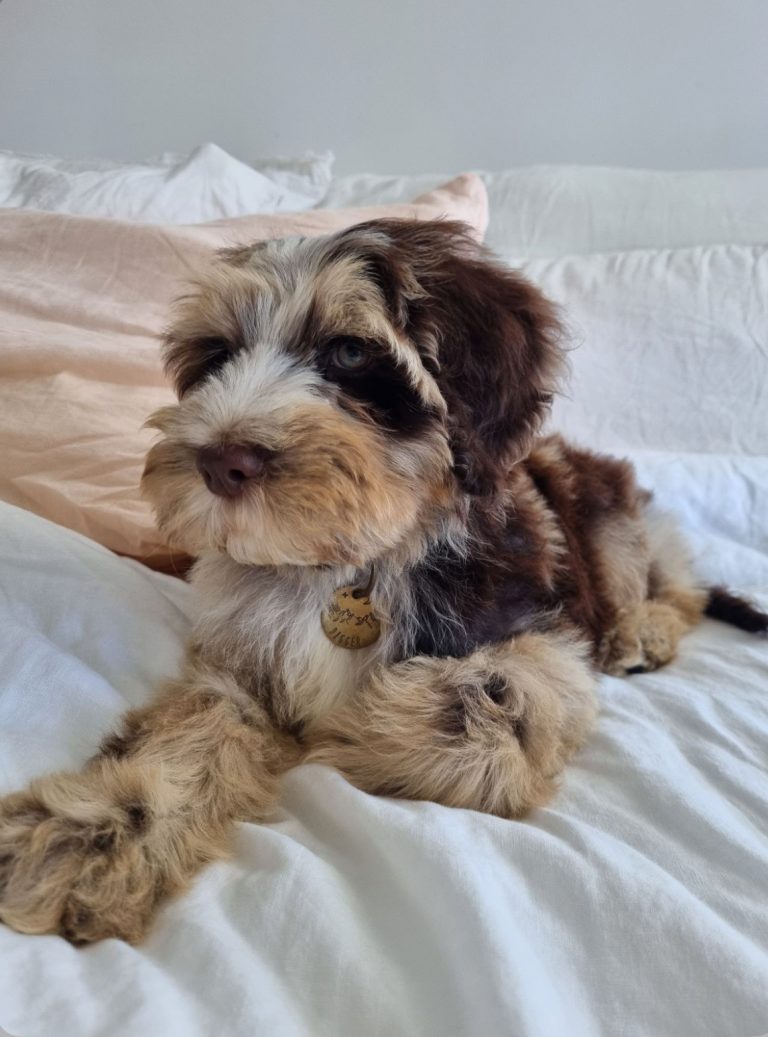
Heterochromia is the scientific term to describe the appearance of two different coloured eyes. Heterochromia is created by a variation in the amount and distribution of melanin pigment in the irises of the eyes. In dogs, this is very commonly due to the presence of the Merle gene. Merle is a dilution gene that primarily affects coat colour (patches of lighter colouring) but may also cause random lightening of the pigment of the eyes.
Development of Eye Colour in Puppies.
In normal development, puppies are born with their eyelids closed. They begin to open their eyes around the end of the second week of life. Newborn puppies have blue or blue/grey coloured eyes. Eye colour will change gradually over the following weeks. The eye colour of your puppy at approximately 16 weeks, is the best indication of the permanent eye colour of your dog in maturity.
Types of Heterochromia.
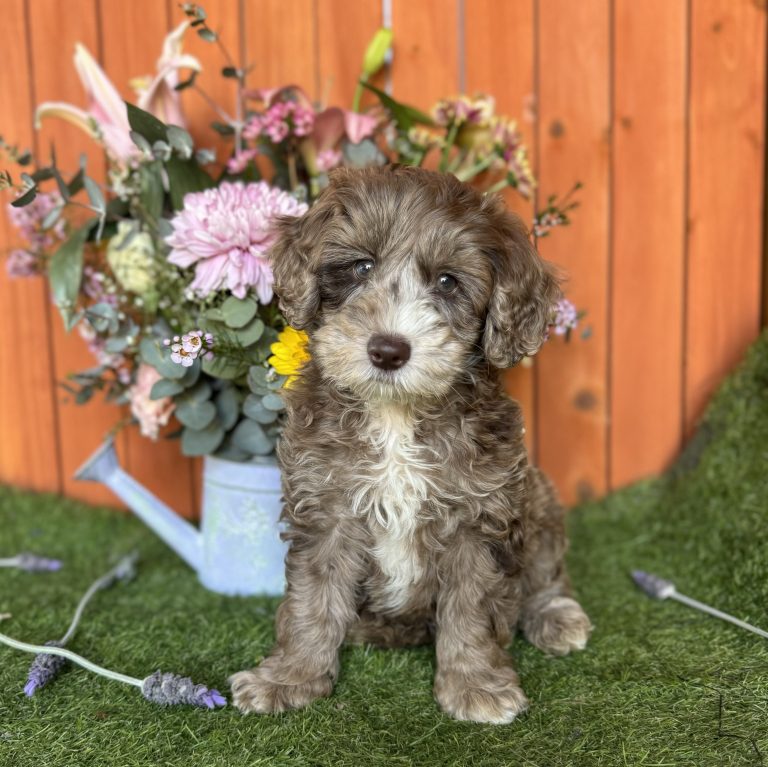
Complete Heterochromia – (Bi-Eyed)
Complete Heterochromia is the term used when both irises of a dog are completely different colours.
Sectoral Heterochromia – (Parti Eyed)
This composition describes two colours within the same iris of the eye. Variations may include flecking; marbling and/or geometric splits (whereby discrete segments are different colours).
Central Heterochromia
A dog displaying Central Heterochromia, will have a different shade of colour in the centre of the iris. Often, this central colour does not form a perfect circle. Instead streaks of colour flare out, in an irregular manner, and merge into the outer colour of the eye.
Health Risks
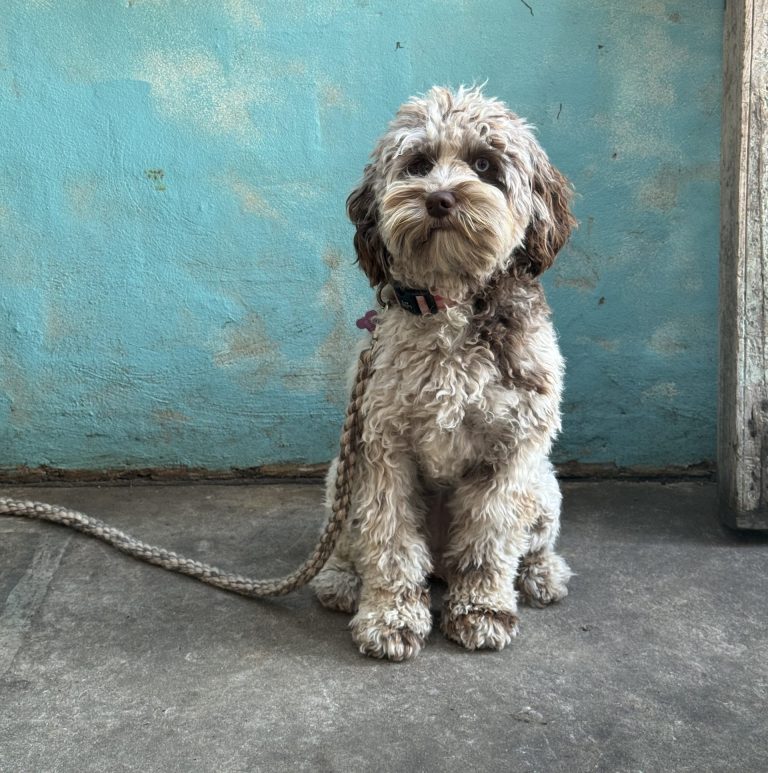
Heterochromia produced from a single Merle gene is a cosmetic trait. It is NOT associated with any health concerns such as blindness or other eye defects. On the other hand, if a puppy is bred from two Merle parents (Double Merle), this DOES carry risks of visual problems. Visual abnormalities associated with homozygous Merle, are present at birth and can range from mild irregularities to complete blindness. I must emphasise that these risks are associated with Double Merle, (where both the Dam and the Stud carry the Merle gene). Ethical breeders take every care to only breed a Merle Dog with a non-Merle Dog and conduct extensive genetic testing before selecting breeding pairs.
Myths and Superstitions.
Wall-Eyed Beauties have fascinated people from diverse cultures, across the world for centuries.
In some cultures, different coloured eyes carry spiritual significance. In some religious circles, both animals and humans blessed with Heterochromia are deemed to have the ability to see both heaven and earth. A few Indigenous cultures view those with Heterochromia to be sacred and to possess extraordinary abilities.
Folklore bestows Heterochromia to be a good luck charm. A magical symbol of good fortune, and an omen of positive events. Eastern Cultures regard those with Heterochromia as providing protection against Evil Spirits – a kind of natural talisman.
A DESIRABLE TRAIT
If you are purposely looking for a puppy with different coloured eyes – and many people do! – Just be sure to do your homework. Only purchase from a Breeder who genetically tests their breeding stock and can verify that the puppy is heterozygous for the Merle gene.
Also be sure to make eye colour secondary to the puppies health, personality and suitability for your family.
Blue eyes are a highly desirable trait. It is relatively rare for adult dogs to have blue eyes or Heterochromia. There is no guarantee that a puppy with blue eyes at 6 weeks will still have blue eyes at 16 weeks. A puppy’s eye colour may change over time, transitioning from blue to hazel/green or brown. If you are lucky to get the perfect bi-eyed beauty then revel in your exceptional puppy
Burrinjuck Labradoodles are currently planning their next Merle Litter. Please reach out if you would be interested to find out more information