
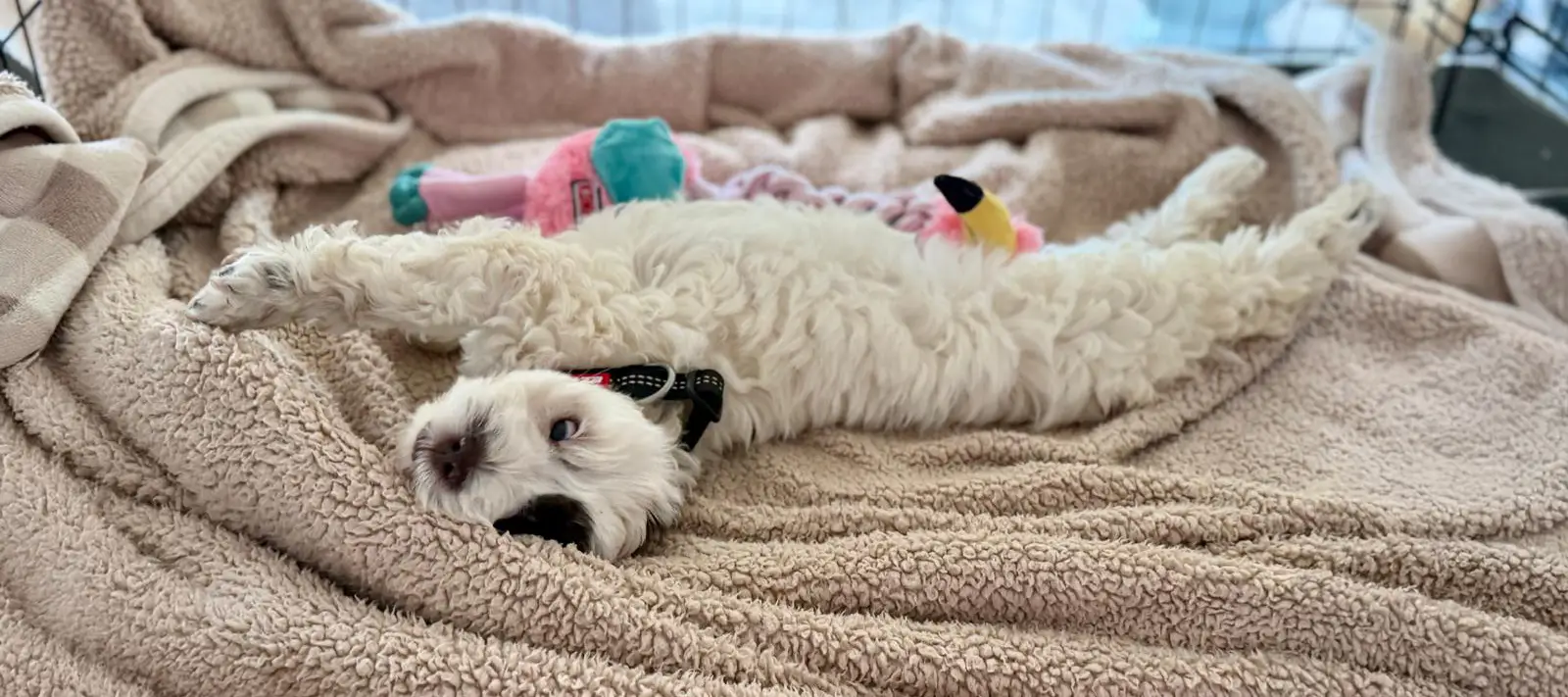
Preventing separation-related distress in a new puppy
The tug on the heartstrings is real. Your new bundle of fluff is whining softly, clearly feeling a little distressed. You may have been given conflicting, well meaning advice. “ let him cry it out”, “he’s just a baby”, “don’t make a rod for your own back”.
The intention of this blog post is to support you and your puppy during the first few months as he or she transitions into your family. I avoid extremes and it is not realistic or appropriate to be 24/7 in the company of your dog.
I have personally experienced the distress created when an owner cannot leave the house without their 6 month old puppy, being consumed by anxiety, howling and whining and destroying property.
The Mission is Clear. Teach your puppy that short separations are safe. Build confidence and calmness during alone times, and set up the environment so that your puppy associates solitude with pleasure and restfulness.
How will you do this? The best approach is gradual desensitisation. It is important that teaching begins below the puppy’s distress threshold and that you pair separation with a positive experience.
Guiding Principles
A big YES
- reward-based, gradual training
- adequate nighttime sleep
- overnight crate training
An even bigger NO
- aversive/punitive responses
- physical corrections,
- intimidation
- deliberate overwhelming exposure
The most important take-away I would like to share in this blog, is don’t assume that learning independence will just happen magically by osmosis. It is a skill that must be actively taught.
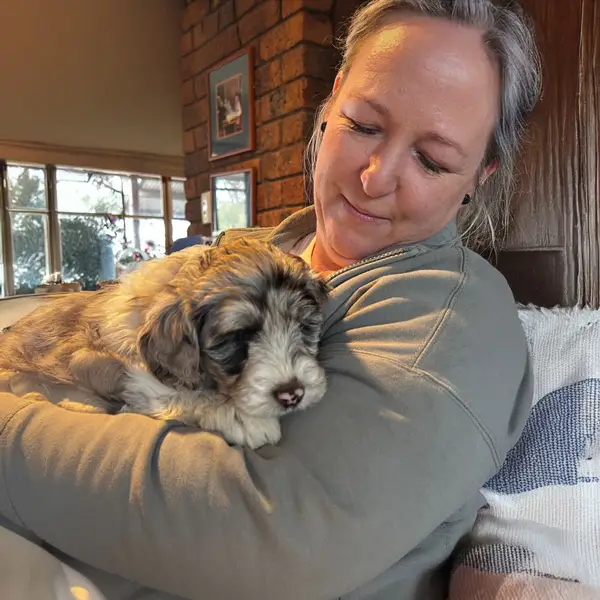
The set-up:
Your puppy needs a safe, positive resting area. Allow a couple of days for your new addition to settle and feel secure. Keep your puppy close. Expect some whimpering, whining and crying. Be their comforter; their safe haven and their protector. The emphasis for the first week is on establishing a secure attachment with you. Please understand that your puppy has been in constant contact with his/her siblings and Mum. It’s a scary world without the security of his doggy pack. Your family will become his/her new secure attachment.
From the first day, give your puppy a predictable sleeping and settling area. This could be a crate. Crates should function as a comfortable rest or play area, never as a punishment. An alternative set-up might be a larger pen, gated room, or other safe arrangement. At night, you may choose to have a crate set up next to your bed or in the lounge room, close by.
After a few days, it is important to begin stretching the moments for solo toy play and naps in their safe place, during daytime routines. It is important that your puppy practise being content without continuous human engagement. Provide part of their food, safe chews, and calm toy play, during these times, while you are nearby.
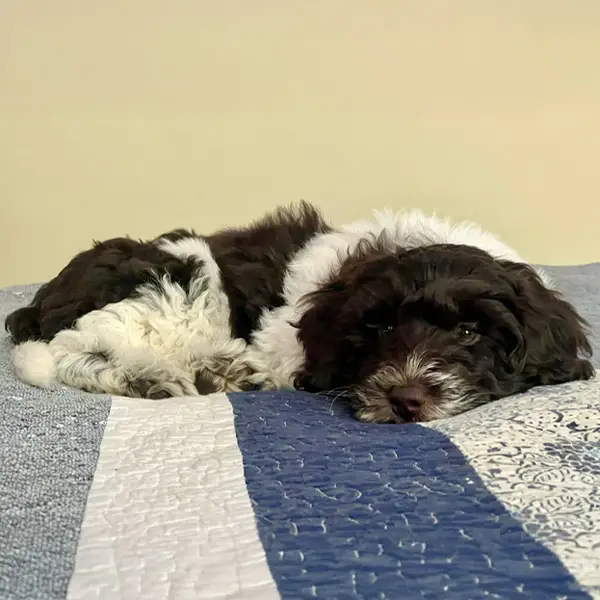
Protect Sleep:
Protect sleep,
A tired or over-stimulated puppy is difficult to read and less able to settle. Have you had the experience of an over-tired toddler who becomes hyperactive when the window for sleepiness has passed. The transformation from sweet cherub to argumentative and illogical demon child is astonishing. It is the same for our puppies.
A skittish and over-wired puppy may well be lacking rest and sufficient down-time. Your puppy should be getting a solid and unbroken 9 hours of sleep by 16 weeks. A recent study found an association between more night time sleep and fewer later reported separation-related behaviours at 6 months.
The same is true for exercise. It is important not to over-exercise your puppy. Teaching calming behaviours through strategies such as “mat time”, “ crate time” and remaining on a lead and tethered to a secure spot for short periods of time, can assist to regulate the nervous system of an overstimulated puppy.
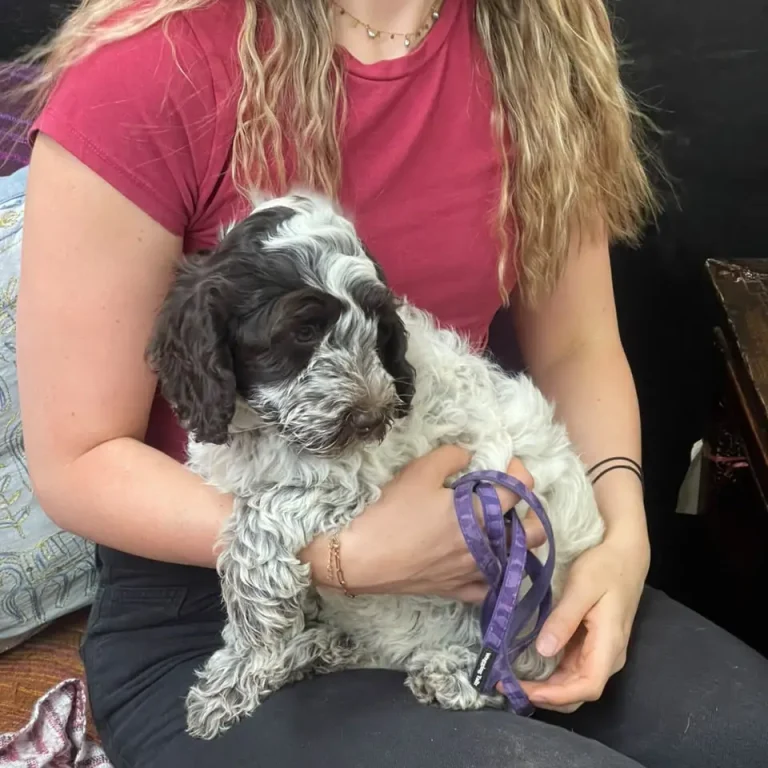
A practical progression for the first few months
Week 1–2: teach settling while you are still home
Teach Relaxation First
Place your puppy in the established resting area. Provide him/her with something to chew or an entertaining toy or puzzle. A stuffed kong toy is a great option. Kongs can be filled with frozen bone broth, yoghurt , cream cheese or peanut butter. The options are endless. The Kong Rubbers take time to consume so are a great distraction. Another advantage with chew toys is that the very act of chewing, gnawing and licking is self soothing and promotes rest.
Sit calmly nearby, so that your puppy can easily smell and see you. Reward relaxed behaviour: soft body, normal breathing, eating or chewing comfortably, choosing to lie down, or a nap. Rewards may be a gentle pat, a loving look and a kind tone of voice. It could be a piece of kibble if you have a food centric puppy. Next stand up, take one or two steps away, and return before the puppy becomes concerned.
Increase your distance
The next stage in independence practice is increasing distance. Once your puppy is settled and relaxed, stand up, take one or two steps away, move around the room, and return before the puppy becomes concerned. This is independence practice, not a test of willpower.
It is greater challenge for your pup if you are not within his/her field of vision. Once your puppy has gained confidence during the first stage, increase the challenge by exiting behind an interior door for a moment, and come back. Once mastery is obtained as you leave and enter various rooms within your home, then you can step outside .
Advance to the next stage only when your puppy feels comfortable and relaxed. Keep the repetitions short and easy. The correct starting duration is the one at which your puppy remains relaxed. The progression is incremental and slow.